
Murshidabad history in brief
The history of Murshidabad begins with Murshid Quli Khan, who moved the capital of Bengal here from Dhaka. The older name of the town was Muksudabad. After the British conquest of Bengal, Murshidabad remained a seat of administration for a time.
Today the story is spread across the town. Tombs, mosques, an Imambara, cannons and a nineteenth-century palace each belong to a different period. Berhampore has its own chapter as a garrison town.
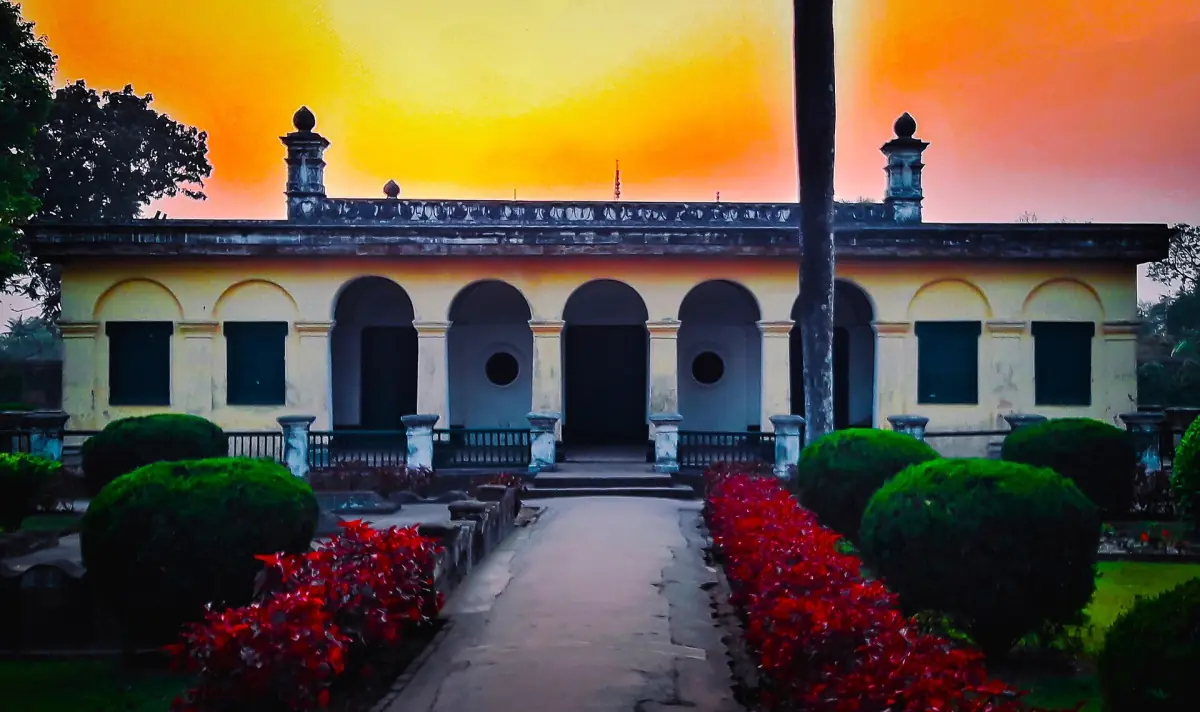
Murshidabad timeline
The main dates and the places that belong to them.
| Year | What happened | Where to see it |
|---|---|---|
| 1637 | The cannon Jahan Kosha was cast in Dhaka in the reign of Shah Jahan | Tope Khana, Murshidabad |
| 1717 | Murshid Quli Khan moves the capital from Dhaka to Murshidabad | Murshidabad |
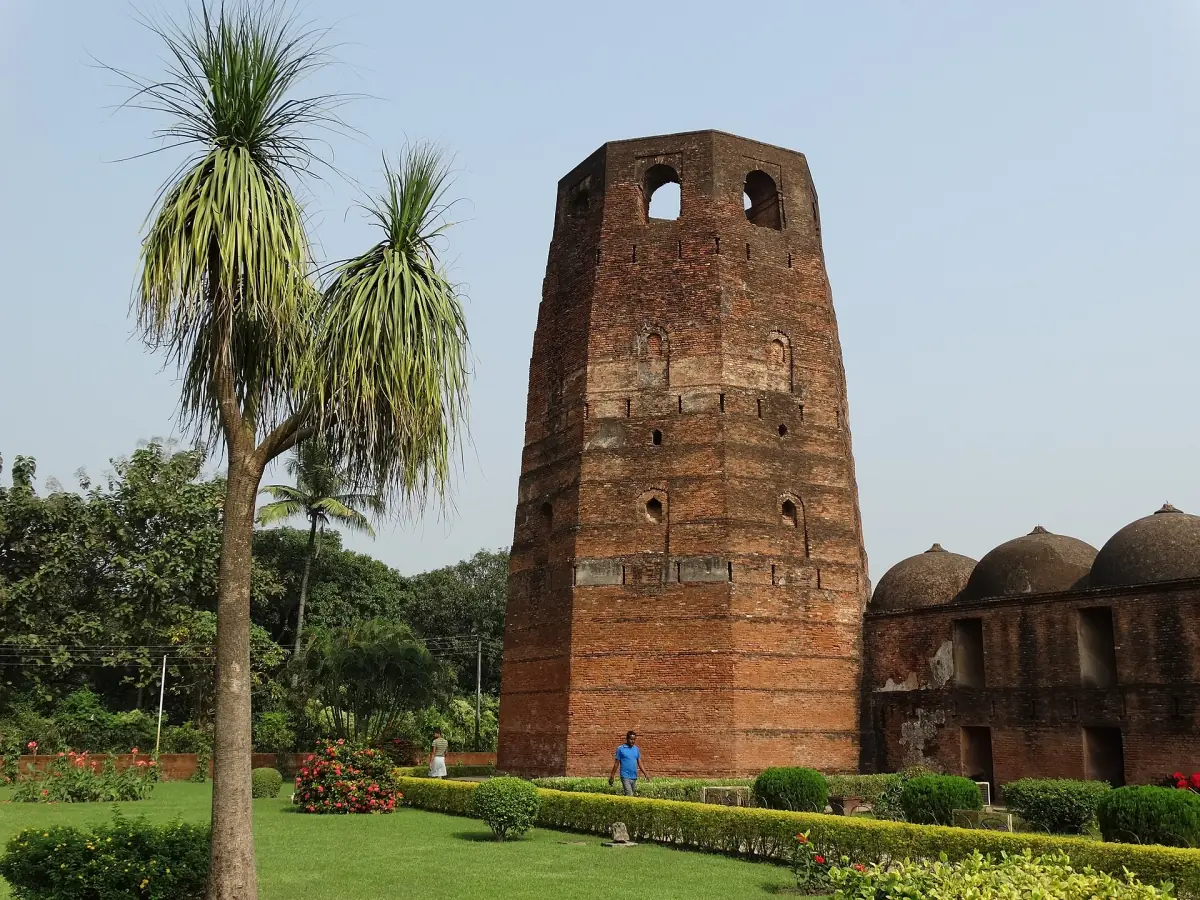
| 1723–1725 | Katra Masjid is built, with Murshid Quli Khan's tomb | Katra Masjid |
| 1750 | The Motijheel Mosque is built on the western bank of the lake | Motijheel |
| 1756–1757 | Siraj ud-Daulah rules Bengal | Khoshbagh |
| 1757 | Battle of Plassey, 23 June | Plassey (Palashi) |
| 1829–1837 | Hazarduari Palace built for Nawab Nazim Humayun Jah | Hazarduari Palace |
| 1847 | The present Nizamat Imambara is built after fires in 1842 and 1846 | Nizamat Imambara |
| 1857 | Events involving the 19th Native Infantry Regiment at the Berhampore garrison | Berhampore |
| 1870 | Berhampore gives up its role as a military station | Berhampore |
| 1876 | The Berhampore municipality is founded | Berhampore |
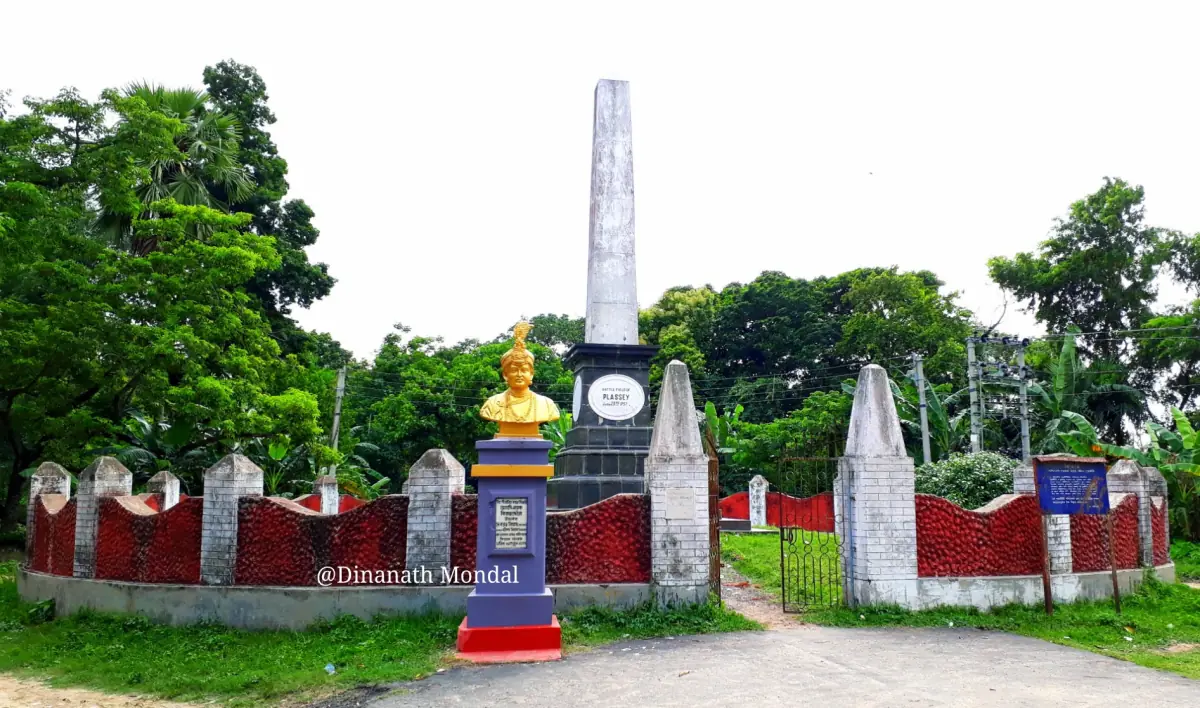
| 1883 | A British victory stone is set up at Plassey | Plassey (Palashi) |
| 1985 | The Archaeological Survey of India takes over the Hazarduari museum | Hazarduari Palace |
For most visitors, a good order is Katra Masjid first, then the Imambara and the Hazarduari Palace, with Khoshbagh and Plassey on a second day.
Murshidabad tours with Nawab-era sights
Programs that cover the palaces, mosques and tombs, with live prices and availability.
Murshid Quli Khan and the capital of Bengal
How the town became a capital.
The 1717 date is tied to Murshid Quli Khan and his official move of the capital from Dhaka to Murshidabad. The town took its later name from him.
His tomb lies at Katra Masjid, a mosque and former caravanserai that he had built. It was built between 1723 and 1725. Read more about what to see there on the places to visit page.
Siraj ud-Daulah and Plassey
The last independent ruler of Bengal.
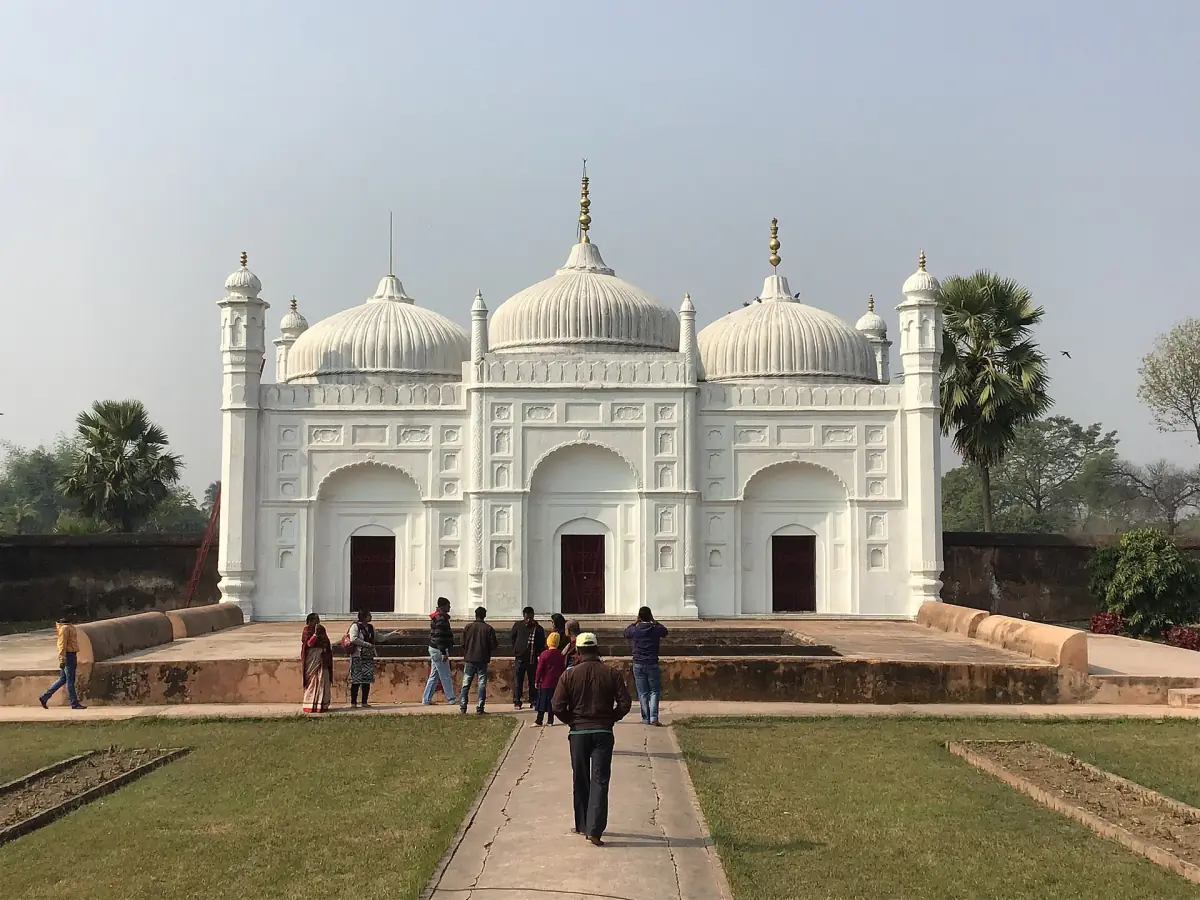
Siraj ud-Daulah ruled from 1756 to 1757. He is known as the last independent ruler of Bengal. On 23 June 1757 he was defeated by Robert Clive at Plassey, a village that lies in Nadia district, not in Murshidabad. The Plassey page covers the battlefield and the memorial.
He is buried at Khoshbagh, together with Alivardi Khan and Lutfunnissa Begum. The graves of Mir Jafar and later Nawabs of the Najafi family are at the Jafarganj cemetery.
Many buildings you see today came after his time. The Hazarduari Museum, the present Imambara and the Plassey monument were all built later. None of them is an unchanged building of his court. His name is also spelled Seraj-ud-Dowla.
After 1757: the Hazarduari Palace and the Imambara
Two buildings of the nineteenth century.
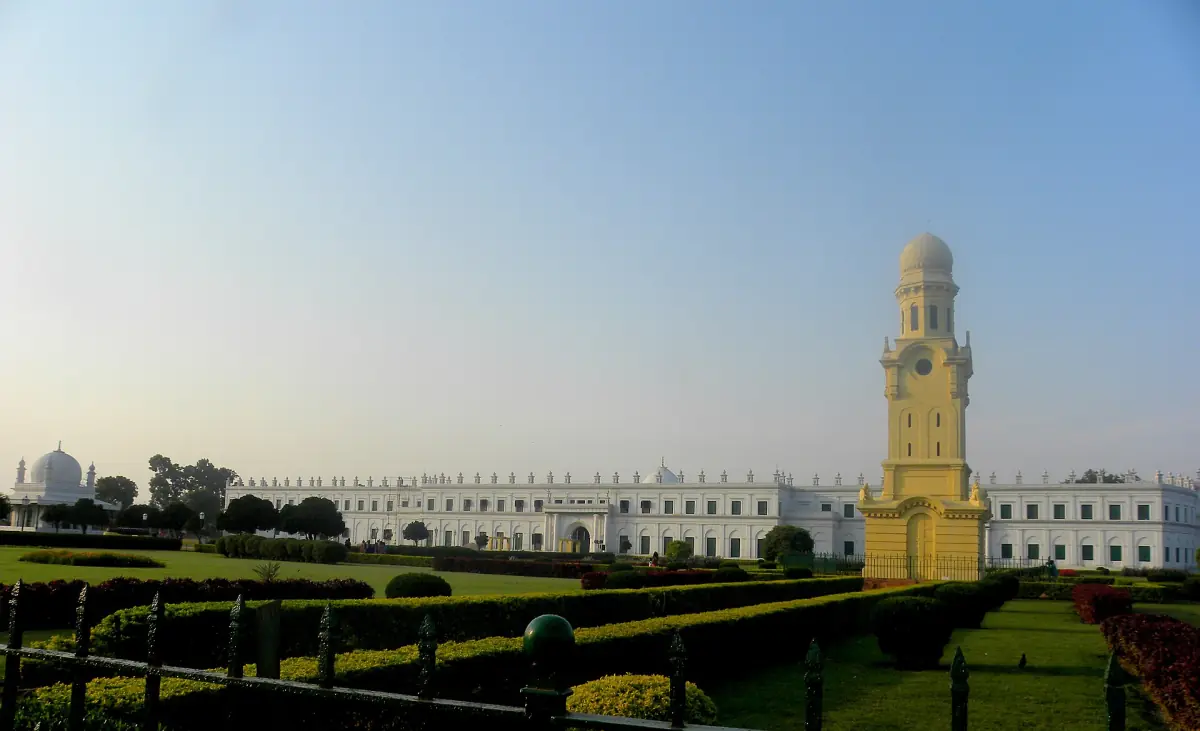
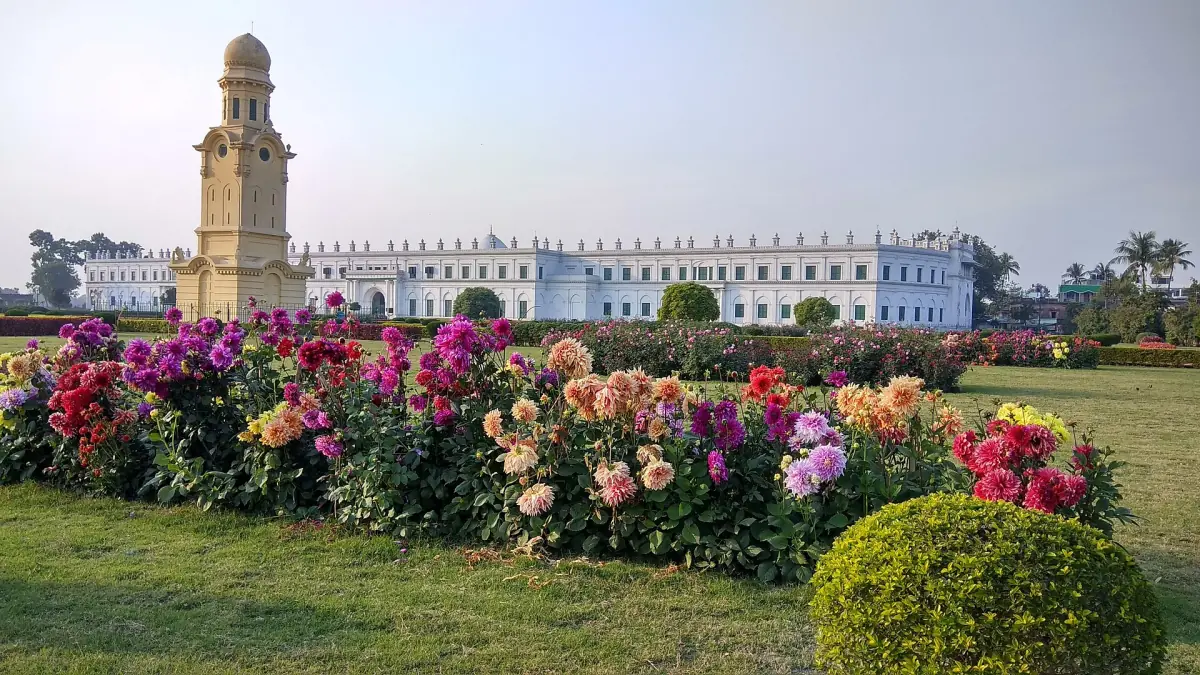
Nawab Nazim Humayun Jah had the Hazarduari Palace built between 1829 and 1837. It is a neoclassical building planned and carried out by Colonel McLeod Duncan, also written Duncan McLeod. It served for durbars and for high-ranking English officials. The museum came under the Archaeological Survey of India in 1985. More in the Hazarduari Palace guide.
The Nizamat Imambara across the road was rebuilt in 1847 by Nawab Mansur Ali Khan. Fires in 1842 and 1846 had damaged the older building from the time of Siraj ud-Daulah.
Berhampore: garrison and town
A different chapter of the story.
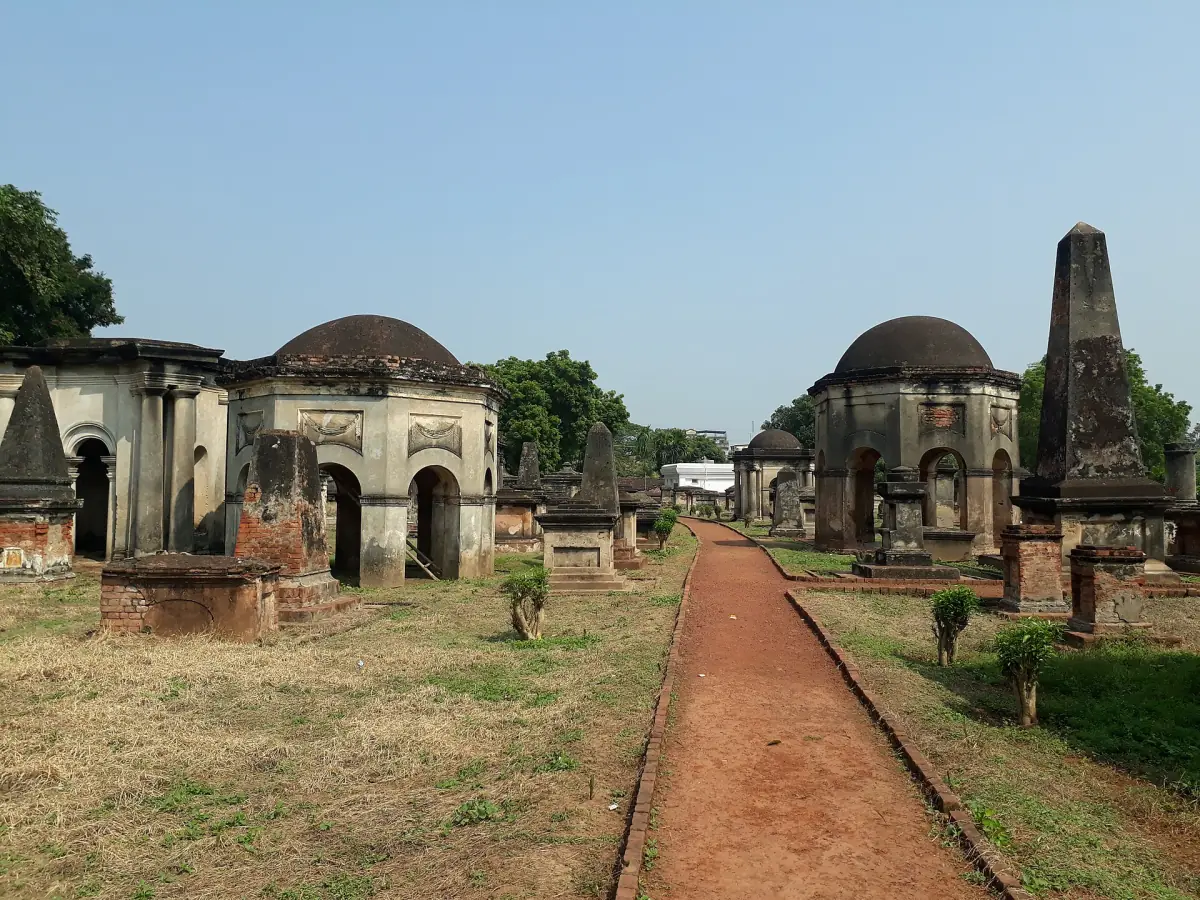
Berhampore was a garrison town. In 1857, events involving the 19th Native Infantry Regiment took place there. The town gave up its role as a military station in 1870, and its municipality was founded in 1876.
Cossimbazar and the former cantonment form part of the local history of Berhampore. The photo shows the old Residency cemetery in Berhampore. Silk weaving has also long been part of the economy and culture of the region.
Murshidabad history: frequently asked questions
Who was Siraj ud-Daulah?
He ruled Bengal from 1756 to 1757 and is known as its last independent ruler. He lost to Robert Clive at Plassey on 23 June 1757 and is buried at Khoshbagh.
When did Murshidabad become the capital of Bengal?
The date of 1717 is linked to Murshid Quli Khan's official move of the capital from Dhaka.
Did Siraj ud-Daulah live in the Hazarduari Palace?
No. The palace was built between 1829 and 1837, long after his time. The same holds for the museum, the present Imambara and the Plassey monument.
Did all of India become British after Plassey?
No. Plassey was a key event in a shift of power towards the East India Company, and British rule grew over the following years. It did not happen on one day.
What is the history of Berhampore?
Berhampore was a garrison town. The military station was given up in 1870, and the municipality was founded in 1876.
Is berhampore.org an official site?
No. It is an independent travel guide and is not run by any museum, authority or tourism board.